Pages

Tuesday, February 25, 2014

General Staff at war


The bombing of Moscow grew in intensity. Alerts were sounded nearly every night. Sometimes bombs fell quite close to the General Staff. The shelter in the basement, though quite unsuitable, now had to be used for work as well. Soon the decision was taken that the General Staff should spend the night in Byelorusskaya Underground Station, where a command post and communications centre had been fitted out. More >>>

Sunday, February 23, 2014

Why Norway?


On 9 April 1940, when Nazi Germany without declaration of war attacked Denmark and Norway, it was not the form of attack that surprised the world's public opinion; after all, the invasion of Poland had demonstrated that the Third Reich was breaking international laws unscrupulously. It was the direction of the new aggression that was beyond the comprehension of an average bread-winner. Why Norway, a country of 3 million people, located in the outskirts of the European continent, and maintaining the policy of strict neutrality, became a victim of the brutal and unprovoked aggression? More >>>

Wednesday, January 22, 2014

While Westerplatte was fighting on...


The case of the command on the Westerplatte and steadfast and heroic stance of Major Henryk Sucharski seemed to be beyond dispute ever since the end of the Second World War. Suddenly, it became not so obvious, as a picture of the defence of the Military Transit Depot on Westerplatte from 2 to 7 September 1939 has been emerging quite different from that Polish youth has been learning from the History classes for decades. More >>>

Sunday, January 05, 2014

Possessions of Germany's satellites in Yugoslavia


After the fall of Benito Mussolini no substantial changes occurred in the areas under the Hungarian occupation. Hungarian officers, three high-ranking and several lower ones, responsible for war crimes against the Serbs and Jews, were court-martialled in December 1943. It happened soon after the Allies had announced that war criminals would be punished. The defendants were duly sentenced, but found no obstacles to escape abroad. After March 1944 they came back to German-occupied Hungary and demanded a retrial in the court, which eventually vindicated them and restored to the previous military ranks. More >>>

Sunday, November 24, 2013

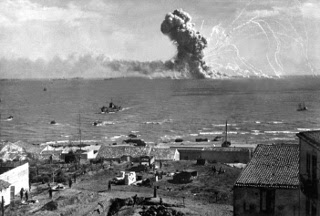
Invasion of Sicily


Capitulation of the German and Italian divisions in Tunisia in May 1943 meant ending hostilities only on one theatre of the Second World War. The victory in North Africa only then would be valuable if followed by an invasion on the European continent and the ultimate defeat of the "Axis" forces. African ports had enlarged the basis for the would-be invasion forces. The Allies were already preparing the next powerful blow. The blow that would shake the so-called Festung Europa ("Fortress Europe"), the pride of Adolf Hitler and Benito Mussolini. More >>>


Sunday, September 22, 2013

Organization and strength of the army


For military administration France was divided into 20 military districts, each corresponding to an army corps command.

More >>>

Saturday, May 11, 2013

Rescue operation


Emergency signals, radioed by the torpedoed Athenia in the Royal Navy's code, within more or less 15 minutes were received by the radio-stations in north-western Ireland. After that captain James Cook ordered to repeat the message in open text. This time almost immediately responded the Norwegian tanker Knute Nelson. She was steaming some 40 miles south-west to the site of torpedoing, and responded that she was changing her course and hastening with help. More >>>